China Top Heavy Duty Gear Motor Manufacturers?

Time:2026-10-18 Author:Oliver
0%

Choosing China’s top heavy-duty gear motor manufacturers requires more than comparing catalog prices. In industrial sourcing, buyers usually examine torque ratings, duty cycles, thermal performance, and service response. A Heavy Duty Gear Motor may drive a conveyor, mixer, hoist, or crushing line for years. Its real value appears under continuous load, not in a polished product photograph. This guide introduces practical criteria for evaluating Chinese manufacturers across demanding applications. It considers engineering capability, production control, certifications, customization, and after-sales support. The goal is a dependable shortlist, not a promotional ranking.

Reliable manufacturers should explain how their gearboxes handle shock loads, misalignment, heat, and frequent starts. Ask for rated torque, output speed, efficiency data, protection class, insulation details, and test reports. Factory evidence matters. Visitors or auditors can review machining equipment, assembly areas, noise testing, and serial-number traceability. A supplier that answers slowly may still produce sound motors, but unclear documentation creates avoidable risk. That point deserves attention.

The following discussion compares leading Chinese suppliers through a buyer’s lens. It weighs product range, material quality, customization experience, delivery consistency, and technical communication. It also recognizes an uncomfortable reality: no manufacturer is best for every project. A compact motor may suit a packaging line but fail on a dusty quarry conveyor. Independent verification remains wise, especially for safety-critical installations. Readers should confirm current specifications, compliance requirements, warranty terms, and spare-parts availability before signing a contract. Good decisions come from evidence, site conditions, and honest questions.
China Top Heavy Duty Gear Motor Manufacturers?

Definition and Role of Heavy-Duty Gear Motors

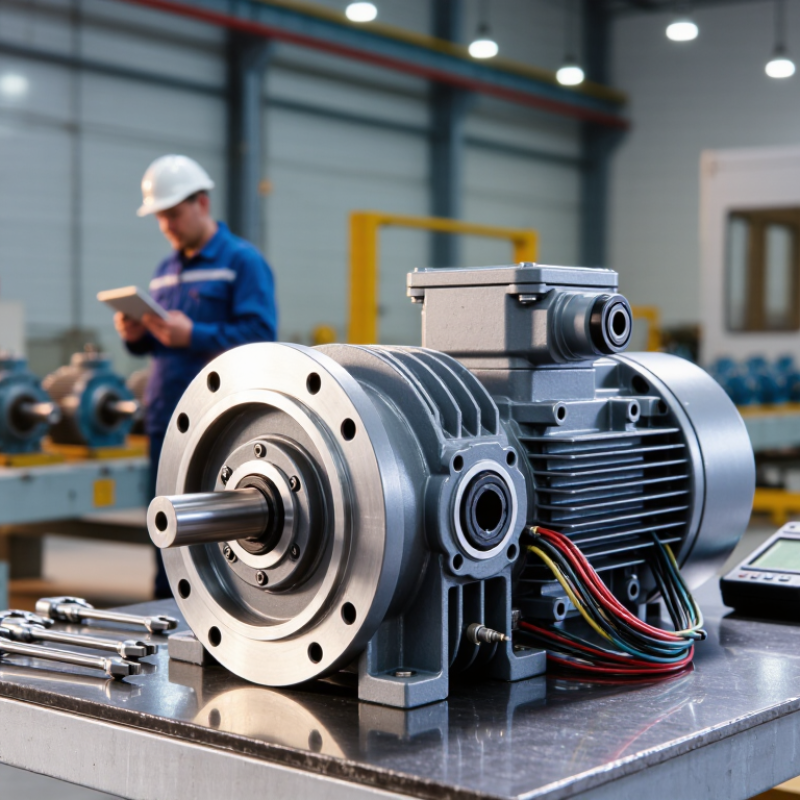
A heavy-duty gear motor combines an electric motor with a gearbox, producing controlled speed and high output torque. The gearbox reduces rotational speed and multiplies torque at the shaft. This makes the unit suitable for conveyors, mixers, crushers, hoists, and material-handling systems. A typical installation may run continuously, face dust, and absorb sudden load changes. It needs more than a large motor.

Its role is practical: transmit power reliably under demanding duty cycles. Gear teeth, bearings, seals, housing strength, lubrication, and thermal capacity all affect performance. The U.S. Department of Energy reports that motor-driven equipment consumes about 69% of industrial electricity in the United States. Efficient transmission therefore matters beyond mechanical output. The IEA’s Energy-Efficiency Policy Opportunities for Electric Motor-Driven Systems also identifies motor systems as using roughly 43–46% of global electricity. Small efficiency losses can become expensive across thousands of operating hours.

For buyers comparing Chinese heavy-duty gear motor manufacturers, technical evidence should guide the decision. Check rated torque, service factor, insulation class, ingress protection, noise, temperature rise, and gearbox life calculations. ISO 6336 methods can support gear load evaluation, but test conditions still matter. The boundary between “heavy-duty” and “standard-duty” is not perfectly fixed. A unit handling clean, steady loads differs from one facing impact loads every few seconds. This judgment is often missed. Field experience, maintenance records, and documented testing may reveal more than a polished specification sheet.

Key Types Used in Industrial Applications

China Top Heavy Duty Gear Motor Manufacturers?

Heavy duty gear motors convert electrical power into controlled rotary force for demanding industrial equipment. Their design combines an electric motor with a reduction gearbox. The gearbox lowers speed and increases torque at the output shaft.

Helical gear motors suit conveyors, mixers, and packaging lines requiring steady operation. Their angled teeth transfer load smoothly and usually produce lower noise. Bevel helical units change the drive direction by 90 degrees. They fit crushers, bucket elevators, and material handling systems with limited installation space.

Worm gear motors offer compact right-angle transmission and useful self-locking behavior. However, their efficiency can drop during continuous, high-load operation. That detail is sometimes overlooked.

Planetary gear motors deliver high torque from a relatively compact housing. They work well in hoists, automatic guided vehicles, and heavy positioning equipment. Cycloidal gear motors handle shock loads and frequent starting cycles. Their eccentric mechanism can reduce backlash, although maintenance access may be less convenient. Every type has trade-offs. No gearbox is ideal everywhere.

When evaluating Chinese manufacturers, review torque curves, service factors, thermal ratings, sealing grades, and shaft tolerances. Ask for test records, material specifications, and clear installation guidance. In dusty plants, reliable seals and breather placement matter greatly. In wet areas, corrosion protection becomes essential. A motor that looks oversized may still fail under repeated shock loads. Real operating data should guide selection, not catalog numbers alone.

Leading Chinese Manufacturer Selection Criteria

China Top Heavy Duty Gear Motor Manufacturers?

Selecting a leading Chinese manufacturer starts with the application, not the catalog. The IEA estimates that electric motor systems consume about 46% of global electricity. The U.S. Department of Energy also reports that motor-driven systems can exceed half of industrial electricity use. Efficiency deserves serious attention. Ask for verified torque curves, thermal ratings, service factors, and duty-cycle calculations. A gearbox designed for a conveyor may fail on a crusher. Shaft shock changes everything.

A capable supplier should provide traceable test records. Check gear material, heat-treatment results, bearing specifications, backlash, noise, and vibration readings. Confirm compliance with IEC 60034 requirements and relevant IP protection ratings. ISO 9001 certification helps, but it does not replace process evidence. Request a factory audit. Watch the assembly floor, oil filling station, and final test bench. Small details matter, such as sealed connectors and clear torque markings.

Supplier comparison also needs lifecycle data. Ask for efficiency at partial load, lubricant replacement intervals, spare-part lead times, and warranty exclusions. Require a sample unit under realistic load before large-volume purchasing. A polished brochure proves little. In practical audits, documentation can look stronger than production control. That deserves scrutiny. I would also compare three years of failure records, although some suppliers may provide incomplete data. Price alone is a weak filter when one overheated motor can stop an entire line.

China Top Heavy Duty Gear Motor Manufacturers? – Leading Chinese Manufacturer Selection Criteria

Selection Dimension Recommended Benchmark What to Verify Why It Matters for Heavy-Duty Applications
Product Range Helical, bevel-helical, planetary, worm, and parallel-shaft gear motor options Published catalogs, ratio ranges, torque ratings, mounting configurations, and dimensional drawings A broad range makes it easier to match the gearbox to load, speed, space, and installation requirements.
Rated Torque and Service Factor Selection based on output torque, duty cycle, shock loading, starts per hour, and application service factor Torque and power charts, calculation method, thermal ratings, and overload recommendations Heavy machinery often experiences starting torque and impact loads that exceed nominal operating conditions.
Motor Efficiency Motor efficiency class and test method clearly stated; IE3 or higher where applicable to the target market Motor nameplate, efficiency test report, applicable IEC requirements, and rated operating conditions Higher efficiency can reduce energy consumption, operating temperature, and total cost of ownership.
Gearbox Efficiency Efficiency data supplied for each gear ratio and operating condition Technical data sheets, no-load and load test procedures, and thermal performance information Gearbox losses affect heat generation, energy use, and continuous-duty reliability.
Materials and Heat Treatment Case-hardened or appropriately heat-treated alloy gears with controlled hardness and dimensional accuracy Material certificates, heat-treatment records, hardness reports, and gear inspection results Proper material selection and heat treatment improve tooth strength, wear resistance, and service life.
Bearing and Shaft Design Bearings and shafts sized for radial load, axial load, bending moment, and duty cycle Bearing calculation data, shaft drawings, allowable overhung-load tables, and inspection records Correct load capacity helps prevent premature bearing wear, shaft deflection, and seal failure.
Ingress Protection Protection level selected according to the installation environment; IP55 is a common industrial baseline IP test documentation, enclosure construction, cable-entry design, and sealing details Dust and water protection is essential in outdoor, washdown, mining, agricultural, and process environments.
Thermal Management Thermal rating confirmed for ambient temperature, altitude, duty cycle, and installation orientation Thermal-limit calculations, cooling-fan specifications, oil capacity, and temperature test results Insufficient heat dissipation can accelerate lubricant degradation and reduce insulation and bearing life.
Noise and Vibration Control Controlled gear accuracy, dynamic balancing, alignment, and documented noise or vibration limits Noise test conditions, vibration measurements, gear-grade information, and balancing records Lower vibration supports operator comfort, machine accuracy, bearing life, and predictive maintenance.
Quality Management A documented quality management system, preferably certified to ISO 9001 Current certificate, scope of certification, internal inspection procedures, and corrective-action records Process control and traceability reduce variation between production batches.
Testing Capability Routine testing for insulation, no-load current, leakage, vibration, temperature, and output performance Factory acceptance test forms, test-equipment calibration records, and sample test reports Verified testing detects assembly, electrical, lubrication, and performance problems before shipment.
Customization and Engineering Support Support for special ratios, shafts, flanges, brakes, encoders, coatings, and inverter-compatible motors Application calculations, approval drawings, engineering-change control, and prototype procedures Application-specific engineering reduces the risk of incorrect sizing and installation interference.
Compliance Documentation Documentation aligned with the destination market, including applicable electrical, safety, and environmental requirements Declarations, certificates, test reports, manuals, nameplate data, and required technical files Complete documentation supports customs clearance, installation, audits, and regulatory compliance.
Lead Time and Production Capacity Capacity demonstrated through production planning, critical-component availability, and realistic delivery schedules Capacity statements, production plans, standard lead times, bottleneck analysis, and delivery performance records Reliable delivery is important for equipment projects, spare-parts planning, and production continuity.
Warranty and After-Sales Service Written warranty terms, technical troubleshooting, spare-parts support, and defined response procedures Warranty policy, service workflow, spare-parts list, failure-analysis process, and service contact structure Effective support reduces downtime and improves lifecycle value after commissioning.
Total Cost of Ownership Evaluation based on purchase price, energy use, lubricant, maintenance, downtime, and expected service life Five-year cost model, energy assumptions, maintenance intervals, spare-parts prices, and replacement costs The lowest purchase price may not provide the lowest operating cost over the equipment lifecycle.
Recommended evaluation method: Request identical technical data, drawings, test reports, commercial terms, and service commitments from each candidate, then score them using the same weighting system before making a final supplier decision.

Manufacturing Standards, Testing, and Quality Control

China Top Heavy Duty Gear Motor Manufacturers?

Reliable heavy duty gear motors begin with controlled manufacturing standards. A capable factory should document steel grades, heat-treatment cycles, gear accuracy, and assembly tolerances. Traceable material certificates connect each gearbox to its production batch. Quality teams should follow recognized electrical and mechanical standards, while calibrated instruments support every measurement. Small gaps still occur. Honest suppliers record them instead of hiding them.

Testing must reflect real working conditions. Inspectors may measure tooth contact patterns, backlash, shaft runout, insulation resistance, and oil leakage. A loaded test can reveal abnormal temperature rises, vibration, or noise. Extended run-in testing is valuable because early failures often appear after several operating hours. Test reports should show torque, speed, voltage, current, temperature, and test duration. Photos and serial numbers improve accountability.

Tips: Ask for recent test records, calibration dates, and acceptance limits. Confirm whether tests use the exact motor configuration ordered. Visit the facility when possible, and observe cleanliness, storage, and final inspection habits. Do not rely on polished certificates alone. Compare sampled data with the approved drawings and application requirements. A serious manufacturer welcomes technical questions, although its process may not be perfectly consistent every time.

Applications, Export Services, and After-Sales Support

China Top Heavy Duty Gear Motor Manufacturers?

Heavy duty gear motors support conveyors, mixers, crushers, hoists, and automated production lines. Their selection depends on torque, speed, duty cycle, load shocks, and operating temperature. A reliable manufacturer should explain these factors clearly, not simply recommend the largest motor. In practical projects, a correctly sized unit can reduce energy waste and mechanical stress. However, specifications are not always enough. Real dust, vibration, and uneven loading may change performance.

For export projects, experienced suppliers usually provide technical drawings, efficiency data, packing details, and installation instructions. They should confirm voltage, frequency, mounting position, shaft dimensions, and brake requirements before production. Strong export service also includes inspection records, serial traceability, and accurate customs documents. Seaworthy packaging matters too. A damaged gearbox creates delays before commissioning even begins.

After-sales support should cover troubleshooting, spare parts, lubrication guidance, and remote technical assistance. Clear response times are valuable when a production line stops unexpectedly. Some manufacturers can offer video inspections or help interpret vibration and temperature readings. Yet no supplier handles every case perfectly. Buyers should request service procedures in writing and test communication before placing a large order. This simple step often reveals whether support is practical or merely promised.

FAQS

What is a heavy-duty gear motor?

It combines an electric motor with a gearbox. The gearbox lowers speed and increases shaft torque. It suits conveyors, mixers, crushers, and hoists.

How should buyers define “heavy-duty”?

Consider shock loads, operating hours, dust, vibration, and temperature. A clean conveyor load differs from a crusher load. The term is not perfectly fixed.

Which technical specifications deserve close attention?

Check rated torque, output speed, service factor, insulation class, ingress protection, and temperature rise. Also review noise, vibration, backlash, and gearbox life.

Why are efficiency and thermal capacity important?

Motor systems can consume a large share of industrial electricity. Small losses become costly over thousands of operating hours. Heat also shortens component life.

What testing evidence should a supplier provide?

Request torque curves, thermal tests, gear material details, and heat-treatment records. Ask for realistic load testing. A polished brochure proves little.

How can buyers compare manufacturers fairly?

Compare three-year failure records, spare-part availability, warranty exclusions, and partial-load efficiency. Review factory controls and final test procedures. Documentation may still be incomplete.

What details must be confirmed before export production?

Confirm voltage, frequency, mounting position, shaft dimensions, and brake requirements. Request drawings, inspection records, serial traceability, and accurate customs documents.

What should after-sales support include?

Support should cover troubleshooting, lubrication, spare parts, and remote technical guidance. Written response times help during unexpected downtime. Communication should be tested before purchase.

How can buyers reduce commissioning problems?

Request a sample unit under realistic load before larger orders. Check packaging, oil filling, connectors, and torque markings. No checklist is perfect.

Conclusion

A Heavy Duty Gear Motor is an integrated power transmission system designed to deliver high torque, stable speed, and dependable performance under demanding industrial conditions. This article explains its role in machinery and introduces key types, including helical, bevel, worm, planetary, and parallel-shaft gear motors. Each type offers different advantages in efficiency, load capacity, compactness, and installation flexibility, making proper selection essential for specific operating environments.

It also outlines how to evaluate leading Chinese manufacturers by examining engineering capability, production capacity, customization services, certifications, and quality consistency. Important considerations include manufacturing standards, material inspection, precision processing, load testing, noise control, temperature testing, and final performance verification. In addition, the article reviews applications in conveyors, lifting equipment, mixers, packaging lines, and other industrial systems. Export experience, documentation, packaging, delivery coordination, spare-parts availability, technical guidance, warranty policies, and responsive after-sales support are also vital factors when choosing a reliable long-term supplier.

Oliver

Oliver

Oliver is a seasoned marketing professional with a wealth of expertise in driving brand awareness and engagement. With a deep understanding of our company's product offerings, he consistently delivers high-quality content that enriches our professional blog. His insights not only shed light on......